5 minutes to read
Hi, there! This article will teach you about the right choice to make for cold meats.
Although still not widely used in Latin America (which traditionally uses animal casings), the collagen casing for cold meats is already the most popular alternative in developed countries. But collagen casings still provide many advantages that are making its use more widespread in this continent, changing a deeply rooted cold meat culture.
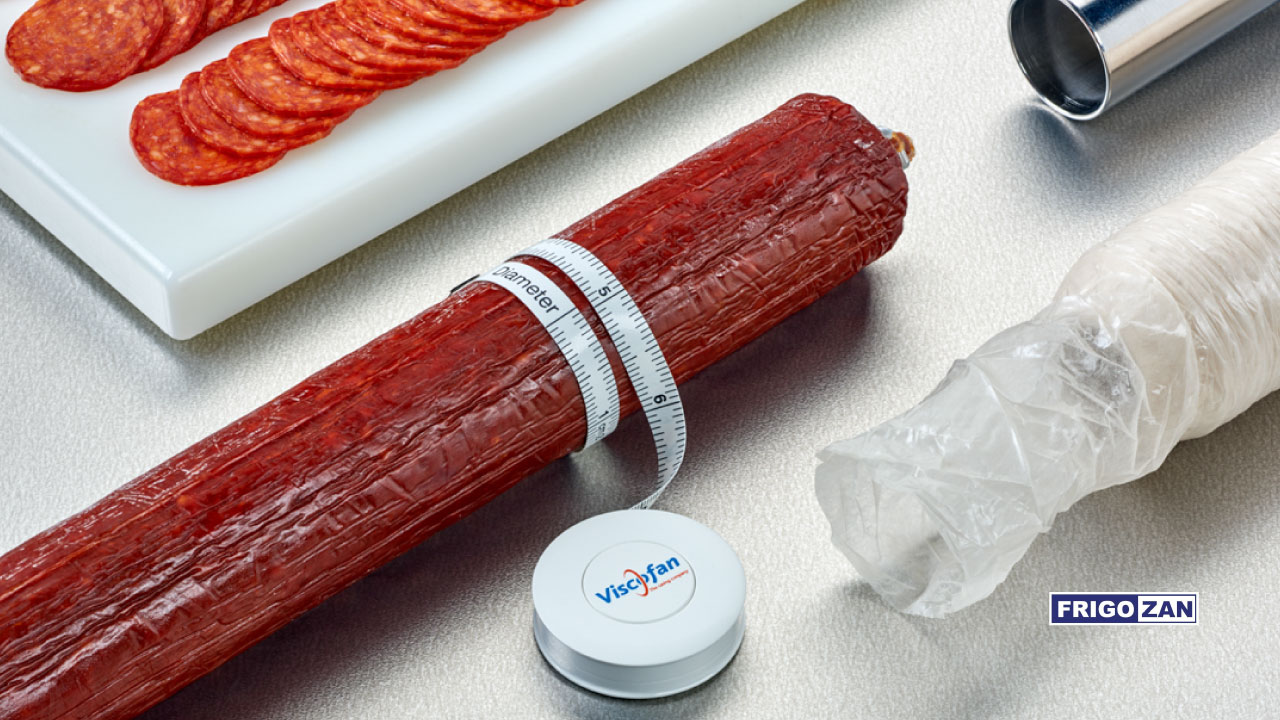
Produced from collagen found in the dermis of hand-picked bovines, collagen casings are both natural and sustainable.
However, this “market disruption” is still going at a slow pace due to the number of questions producers still have and that have become diffused in the industry’s practices. What further exacerbates this issue is that there may not be advantages from a cost-benefit standpoint in general, due to a lack of knowledge on certain aspects.
With this in mind, we’ve written this post to answer your biggest questions about collagen tripes for meats products.
Keep reading to learn more!
What are the unique aspects of collagen casings for meats products?
Although there is currently a large variety of options in the market for meats products, in addition to those already mentioned, such as fibrous, cellulose, plastic, and even vegan casings (fulfilling the demands of consumers looking for products that are not of animal origin), casings made from animals’ intestinal track (especially pork and poultry) are the most used in the sector.
We’ve highlighted these unique characteristics in order to make them easier to understand, drawing comparisons with animal casings. Let’s check them out!
High productivity
Since they’re ready for use, collagen casingsallow cold meat producers to increase productivity. This is the first differential compared to animal casings, which take longer to prepare due to being conserved in salt, only to later be washed and hydrated.
Improved thickness and weight control
Unlike animal casings, collagen casings for meats products are generally thinner, and even more resistant. This allows the product’s flavor to be preserved, which is a positive point especially for the end consumer.
Reduced costs
As stated earlier, animal casings are made from the animal’s intestinal tract. This means there is a greater risk of imperfections like tears or holes, which especially impact issues related to standardization. As a result, these casings can be rendered unusable and lead to losses in the manufacturing process.
Collagen casings, on the other hand, have reduced costs since they are not subject to such risks, making it a more attractive cost-benefit alternative for the meats products industry.
Lack of unpleasant odors and flavors
When animal casings go a sufficient period of time without oxygenation, they may emanate a strong odor, almost as if they’re rotten. On the other hand, collagen casings have a much softer odor (sometimes imperceptible) during manufacturing due to lacking a porous surface, and, even when stored in freezers, they do not absorb unpleasant odors or flavors.
Maintains humidity
It’s well known that animal casings, especially when close to their expiration date, may become dry. Moreover, they can secrete a fluid that makes them look like they’re undergoing aging. On the other hand, collagen casings better preserve the product’s humidity also due to a less porous surface, ensuring its consistency throughout its physical length.
Preservation
The leading collagen manufacturers ensure the product’s quality is maintained for two years after manufacturing, assuming it’s stored in a dry environment with ambient temperatures below 24 ºC.
Compatible with prints
Unlike animal casings, collagen casings allow producers to print their brand (single color only) on the tripe if they want to, thanks to its anti-blur surface. Available colors are limited to orange, black, and brown. Collagen casings may be colored, too. Remember to check the colors available for you.
Decreased risk of contamination
As said earlier, animal casings must be washed and hydrated due to their method of conservation through salt. Collagen casings, on the other hand, do not require any washing.
This decreases the need for moving the casings to different areas, which consequently decreases the chances of contamination. This is also a positive point for the end consumer, thanks to increased product reliability.
What are the most important points to consider when choosing collagen casings for meats products, and how can you choose the best supplier?
Consumers of meats products are becoming increasingly demanding. Not only are they looking for more attractive visual aspects, but they are also becoming increasingly concerned about their health, sustainability, and sanitary safety. So before picking the best collagen casing for you and your ideal supplier, it’s important to consider end consumers’ demands and what they are looking for.
It’s also crucial to look for reliable suppliers capable of providing high-quality solutions. Viscofan, for example, is the world’s leading collagen casing producer and also creator of the TRIPA 4.0 campaign to drive market disruption.
The company also has its own line of edible vegetable products, Viscofan Veggie, allowing you to reach consumers who prioritize the consumption of vegan proteins. Viscofan is a company that supports new consumption habits and emphasizes that market trends require constant innovation.
As global leaders in meat product packages, their objective is to drive more value to customers, prioritizing quality, sustainability, dietary safety, and hygiene.
What do you think? Looking to give flavor, color, and standards to your products and enhance productivity? Learn more about our solutions and the advantages of collagen casings for meats products!
Did you like our tips? Give us a like on our Facebook page and stay up to date on the latest news about this topic!